Partner contentBlind Drill
How Blind Drill uses market replay to examine trading decisions
Blind Drill describes a simulator that hides market identities, replays historical prices and separates adherence to rules from simulated profit.
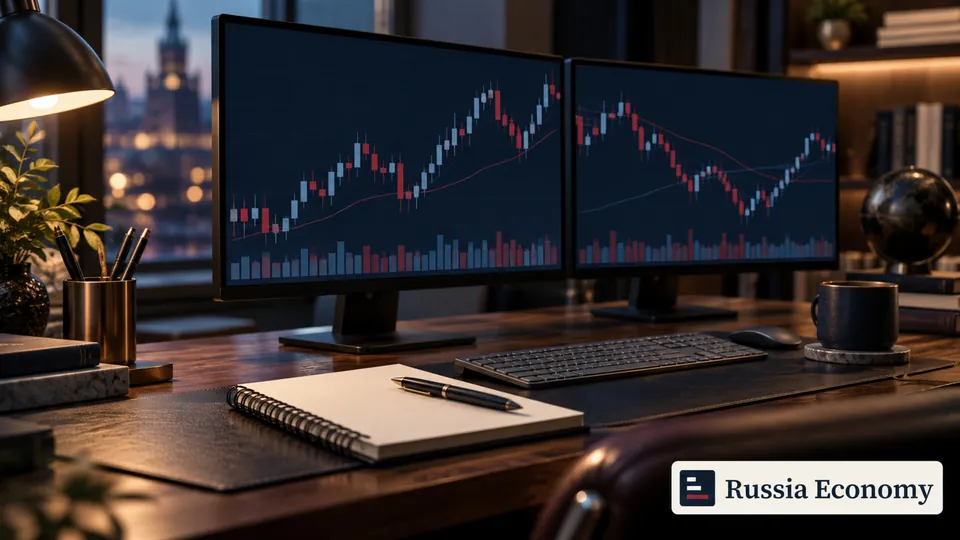
Blind Drill describes itself as a trading practice simulator built around historical market replay, virtual money and a score for following trading rules. Its central exercise hides the instrument's ticker and date while the session unfolds. That changes the question a learner faces: what decision makes sense with the information visible now, before the rest of the chart is revealed?
For Russia Economy readers, the relevance is financial literacy: distinguishing a market narrative from an executable decision, and a favorable outcome from a consistent process. Blind Drill is education and practice software, not a brokerage, a real trading service or financial advice. Simulated results do not guarantee outcomes with real money.
What the replay is designed to reveal
In its published product description, Blind Drill's historical trading simulator presents blind drills using past stock and crypto market days. Its launch article says future bars remain hidden during a session, while users can play, pause or advance the chart one bar at a time. The ticker and date are revealed after a blind session ends.
This design addresses a familiar problem in reviewing charts: knowing the ending can make an earlier decision look obvious. Concealing the identity and unfinished price path is intended to make the exercise less dependent on that knowledge. It does not establish that every participant is free of hindsight bias or that practicing will improve performance.
Blind Drill also describes a scorecard that records rule violations and their timing alongside simulated trading results. This creates two separate things to inspect. A profitable simulation can contain a broken rule; an unprofitable one can still follow the chosen rules. Neither observation, by itself, establishes that the rules are sensible or profitable.
Who the exercise is for
The format is relevant to learners who want to examine decisions during a market session and to people who already keep trading rules but want a structured way to review adherence. A reader can approach it as an exercise in interpreting a changing chart, without treating participation as preparation to commit money.
Blind Drill says its rules can be edited before the first simulated fill and are then locked for that session. Its published examples include limits on risk per trade, daily losses and the number of trades. Those settings are simulation parameters, not recommendations for any reader's finances or an assurance that a chosen limit is safe.
A useful learning question is narrower than whether the session made virtual money: did the participant change the plan after an uncomfortable result, take an action without the intended protection, or continue beyond a chosen limit? These are questions about observable decisions. They do not require a prediction about the next market move.
How this relates to understanding Russia's markets
Economic reporting often starts with an explanation of why prices moved. Trading mechanics ask a different set of questions: what was known at a particular moment, what order was entered, and what assumptions determined its execution? Keeping those questions separate helps prevent a plausible explanation from becoming an unsupported claim that a move was easy to anticipate.
Russia Economy's Moscow Exchange explainer provides background on markets, settlement and investor access. Blind Drill's published description concerns US stock and crypto practice. It should not be read as a claim to provide Moscow Exchange instruments, ruble trading or access to Russian securities. Similar looking charts do not establish identical market rules.
The economic indicators tool serves another purpose: placing economic developments in context. Reading an indicator, interpreting a historical price chart and executing a trade are different activities. A replay exercise can frame questions about decisions under incomplete information; it cannot prove why Russia's economy or an individual asset moved as it did.
A practical way to review a session
Before starting, a learner can write down one question to investigate, such as whether they followed their chosen trade limit. This is a suggested study method, not a feature claim or a trading recommendation. Keeping the question specific makes the later review easier to interpret.
Afterward, the participant can compare the original intention with the sequence of actions and the rule violations described in Blind Drill's scorecard. The purpose is to identify what happened and when. Changing several rules after a single favorable outcome would make it harder to tell which change, if any, mattered.
Reviewing an unfamiliar session also differs from replaying a day whose ending is already remembered. Repetition may help someone learn the controls, but recognition changes the exercise. A higher score on a familiar day should not automatically be interpreted as evidence of better decisions under uncertainty.
Where simulation stops
Blind Drill's launch article describes replay based on one minute bars, without tick data or a Level 2 order book. It says market orders fill at the next bar's opening price with modeled slippage, and that a bar touching both a stop and a target is resolved by assuming the stop came first. These are disclosed simulation rules, not observations of an actual order sent to a market.
That distinction limits what a result can show. A bar based model does not reproduce every price change or execution condition inside that minute. Virtual money also does not put a participant's actual savings at stake. A discipline score measures behavior against configured rules; it is not a certificate of market competence.
The defensible use of Blind Drill is therefore specific: studying a recorded sequence of simulated decisions, with the model's limits in view. Whether an action followed a plan is a question the exercise can help organize. Whether that plan would succeed with real money remains unanswered by the simulation.
Partner content. This article is about Blind Drill and is separate from Russia Economy's editorial coverage.