ExplainerMarkets
The Moscow Exchange explained: markets, settlement and investor access
The Moscow Exchange connects trading with clearing and custody, while sanctions and different account rules make access depend on more than a quoted market price.
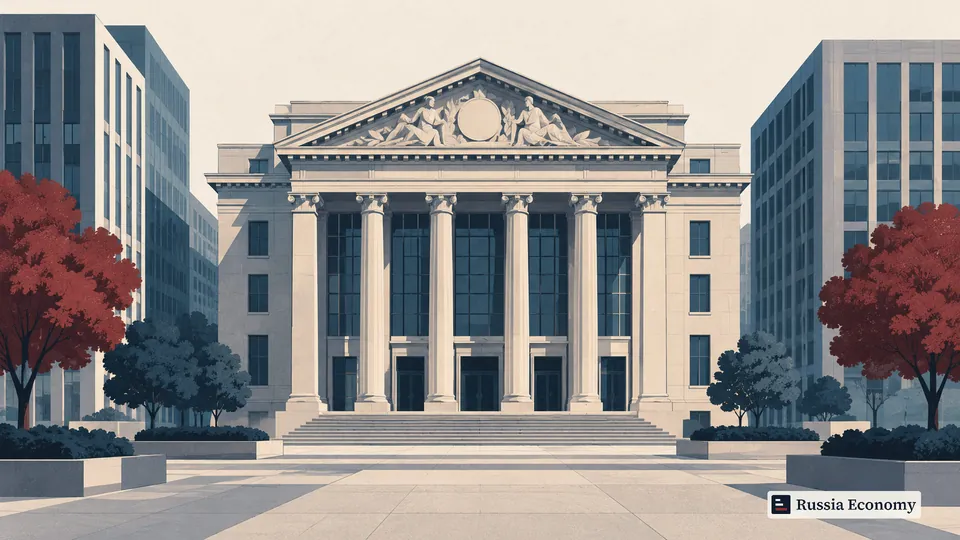
The Moscow Exchange, usually called MOEX, operates markets for shares, bonds, derivatives, currencies, money-market instruments and commodities. Its group also provides the infrastructure that clears trades and records securities ownership. It is therefore more than a stock-price screen: a transaction must pass through trading, risk management and settlement before the buyer receives the asset and the seller receives usable funds.
Access has changed substantially since Russia's full-scale invasion of Ukraine, launched in February 2022. Domestic markets continued operating after temporary closures and later sanctions, while foreign investors faced different restrictions according to their accounts, transactions and applicable jurisdictions. A security having a visible price does not establish that every investor can buy it, sell it or move the proceeds abroad.
What trades on MOEX
The exchange brings together instruments serving different purposes. Shares represent ownership interests in companies. Bonds establish contractual claims on issuers. Derivatives provide exposure to an underlying price, rate or index through a contract rather than necessarily transferring the underlying asset itself. Money-market transactions help institutions manage short-term funding and collateral.
The group's 2025 annual report describes this diversified market structure and the accompanying clearing services. Activity outside equities matters because funding markets can support banks and companies even when stock-market sentiment is weak. A rise in aggregate exchange turnover consequently does not necessarily mean that households bought more shares.
Government borrowing is one connection to the wider economy. The bond market provides a route through which public debt can be issued and traded, alongside corporate obligations. Our guide to Russian government bonds explains OFZ instruments, auction mechanics and the government's financing needs. The issuer, currency and contractual terms must be identified separately for each bond.
Primary and secondary markets also differ. In a new issue, proceeds can provide financing to the issuer. In secondary trading, an investor generally buys an existing security from another holder. That trade improves the ability to transfer ownership but does not send its entire value to the company whose name appears on the share.
Trading, clearing and custody do different jobs
The exchange supplies an organized venue for orders and transactions. The National Clearing Center, or NCC, acts as the group's central counterparty and clearing institution. The National Settlement Depository, or NSD, is the central securities depository. The U.S. Treasury's June 12, 2024 description of the group identifies these distinct functions.
A central counterparty manages the obligations arising between trading participants. It can require collateral and calculate what members owe, reducing direct exposures between each buyer and seller. That reduces one kind of risk while making the clearing institution's own resilience and rules especially important.
Custody and settlement concern records and delivery. Investors often hold securities through intermediaries rather than directly in their own names at the central depository. A broker's customer records, a depository's records and cross-border custody links therefore form part of the chain supporting the investment.
These distinctions explain why an exchange can match orders while some investors still face problems accessing assets. A blockage elsewhere in the chain can affect delivery, income payments or transfers. The trading venue's operational status alone cannot diagnose the condition of every investor's holdings.
What the MOEX Russia Index and RTS Index measure
The main equity benchmarks are the MOEX Russia Index, identified by IMOEX, and the RTS Index. Moscow Exchange describes them as capitalization-weighted indices drawn from liquid shares of major Russian issuers. Free-float adjustments reflect shares available to the market, while index rules constrain concentration and govern changes in membership.
The MOEX Russia Index expresses the basket in ruble terms; the RTS Index expresses it in U.S. dollar terms. The exchange explains this currency distinction in its index material. Exchange-rate movements can therefore create different results from essentially the same underlying shares.
For example, a decline in the ruble can lower the dollar value of an unchanged ruble share price. That is an arithmetic illustration, not a forecast for either index. It shows why describing both benchmarks as competing judgments about corporate performance misses the role of the currency denominator.
A market index is also different from gross domestic product. Listed companies represent a particular group of businesses, and index weights follow market rules rather than the share of national output generated by every industry. Government services and unlisted firms do not appear simply because they are economically important.
Changes in expected earnings, discount rates and available buyers can move share prices before company accounts record a corresponding change. The Bank of Russia's key rate is one influence on that valuation process, while company conditions and market access can pull in different directions.
The 2022 suspension was followed by a controlled reopening
On February 28, 2022, the Bank of Russia decided not to start trading in MOEX's equity, derivatives and standardized over-the-counter derivatives markets. A separate announcement that morning said foreign-exchange, money and repo trading would open, and temporarily prohibited brokers from selling securities on instructions from non-residents.
Calling this a closure of every Russian financial transaction would be inaccurate. Different market segments operated under different schedules and restrictions. The regulator's daily announcements specified what could trade, rather than establishing one rule for the entire financial system.
The Bank of Russia subsequently authorized trading in 33 shares included in the MOEX Russia Index on March 24, 2022. Its announcement, published March 23, specified a limited session and prohibited short selling in those securities. That was a staged equity reopening, not immediate restoration of the conditions prevailing before the invasion.
Market prices after reopening reflected the set of participants and transactions allowed at the time. Comparing them with prices in a less restricted market requires acknowledging that change. The history of Russia's economic crises places the closure and other emergency measures in their wider setting.
Sanctions changed settlement and currency trading
The U.S. Treasury designated MOEX, NCC and NSD on June 12, 2024. Its announcement also noted that the EU had sanctioned NSD in June 2022. These were measures against the institutions supporting transactions, extending beyond a restriction on one company's shares.
The Bank of Russia said the U.S. measures led to suspension of on-exchange trading and settlement for deliverable dollar and euro instruments, while other segments and instruments would continue. Dollar and euro trading remained possible in the over-the-counter market. The suspension did not mean that the currencies ceased to exist in Russian bank accounts.
On June 13, 2024, the central bank began setting official dollar and euro rates using bank reporting and over-the-counter transaction information. That change matters when interpreting historical exchange-rate charts: the official series continued, but the market information feeding the calculation changed.
An investor's usable proceeds can depend on the currency, intermediary and account restrictions even after a trade is completed. Our analysis of sanctions and Russia's economy separates asset freezes, transaction prohibitions and financial infrastructure constraints. Combining them under a single phrase such as market closure loses material detail.
Who can trade depends on the account and jurisdiction
Domestic individuals typically access the market through licensed brokers, while institutions participate under the exchange's admission and clearing rules. The banking system is closely connected because banks provide brokerage, settlement and funding services. An account relationship, however, does not imply access to every instrument or transaction type.
For non-residents, an important change came in August 2025. The Bank of Russia announced rules for In-type accounts allowing eligible foreign investors to use new funds for Russian financial-market investments. The framework covered specified deposits, securities and exchange-traded derivatives, with separate recording requirements.
The regulator expressly distinguished those new funds from assets already restricted in C-type accounts. Having access to an In-type account did not release previously restricted assets for new investment. This is why a statement that Russia reopened its market to foreigners can be materially incomplete without describing which money and accounts are involved.
On September 24, 2026, the central bank extended specified non-resident brokerage and trust-account transfer restrictions for another six months from October 1, 2026. It retained the stated exception for qualifying In-type funds. Russian permission also does not displace sanctions or investment prohibitions imposed by another jurisdiction.
Retail investors are prominent, but account totals need context
Moscow Exchange reported 42.7 million individuals with brokerage accounts at the end of September 2026, holding more than 81.9 million accounts. Almost 3 million people actually traded during that month, according to its October 9 release. Account registrations and active participation clearly measure different things.
The same release put individuals' share of September 2026 equity trading at 66.5 percent, compared with 10.5 percent in bonds. These are turnover shares, not shares of outstanding securities ownership. Frequent trading can create a large share of transactions without producing an equivalent share of the market's invested wealth.
The figures demonstrate a substantial retail role while leaving important questions unanswered: how much capital is concentrated among the active customers, what institutions hold, and how restrictions affect available liquidity. MOEX data are most useful when each series is read with its own denominator. The exchange supplies prices and transaction statistics; explaining the market requires connecting them to settlement, ownership and the rules governing access.
Sources
- Moscow Exchange, Private investors triple investment in mutual funds on Moscow Exchange in September (2026-10-09)
- Moscow Exchange, Annual Report 2025 (2026)
- Moscow Exchange, Moscow Exchange Indices: MOEX Russia Index and RTS Index
- Moscow Exchange, RTS Index celebrates 25 years (2020-09-01)
- Bank of Russia, Trading on Moscow Exchange on 28 February 2022 (2022-02-28)
- Bank of Russia, Operation of Moscow Exchange on 28 February 2022 (2022-02-28)
- Bank of Russia, Trading on Moscow Exchange on 24 March (2022-03-23)
- U.S. Department of the Treasury, As Russia Completes Transition to a Full War Economy, Treasury Takes Sweeping Aim at Foundational Financial Infrastructure and Access to Third Country Support (2024-06-12)
- Bank of Russia, Information on transactions in US dollars and euros due to sanctions against Moscow Exchange Group (2024-06-12)
- Bank of Russia, Information on procedure for setting official exchange rates of US dollar and euro (2024-06-13)
- Bank of Russia, Non-residents' investments in Russian financial market: Bank of Russia's decisions (2025-08-01)
- Bank of Russia, Bank of Russia retains restrictions on cross-border funds transfers from brokerage and trust management accounts for non-residents from unfriendly states (2026-09-24)
- U.S. Department of the Treasury, U.S. Treasury Escalates Sanctions on Russia for Its Atrocities in Ukraine (2022-04-06)
Figures come from the listed sources for the dates and periods stated and may be revised.