AnalysisEconomy
Russia's August growth estimate shows expansion without an industrial rebound
A September 30 ministry estimate points to modest GDP growth, while Rosstat's August production figures show why a broad recovery remains difficult to establish.
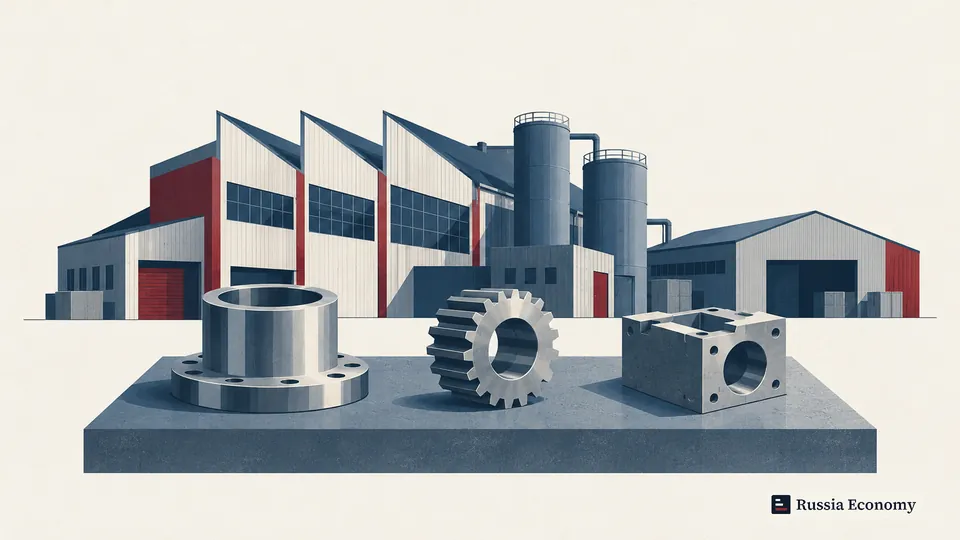
Russia's economy grew modestly in August 2026, according to a Ministry of Economic Development estimate released on September 30 and reported by Interfax. The ministry put output 0.8 percent above August 2025. That was an improvement on its July estimate, but it did not come with an industrial rebound: Rosstat's September 23 release showed August industrial production below its level a year earlier.
The combination matters more than either headline alone. A positive estimate for the whole economy can coexist with weaker factory output. Services and other activities can support GDP while industrial branches struggle, and the two publications use different methods. The releases support a picture of limited expansion with uneven foundations.
The GDP estimate improved, but the year remained weak
The ministry's September 30 review, as reported by Interfax, estimated July 2026 GDP growth at 0.6 percent from a year earlier, followed by 0.8 percent in August. For January to August 2026 combined, its estimate was 0.6 percent above the corresponding period of 2025. An improvement in one monthly comparison therefore did not transform the cumulative result.
These are ministry estimates of real economic activity, not a new quarterly national-accounts release from Rosstat. The distinction affects how much weight to place on the apparent acceleration. A monthly estimate helps establish direction before fuller accounts are available, but later information can change both the latest observation and earlier months.
A year-on-year comparison also asks whether output exceeded the same month a year earlier. It does not establish that August output rose from July after normal seasonal patterns are removed. A weak comparison month can improve the annual growth rate even when the economy's immediate momentum changes little.
Industrial production gave a less encouraging signal
Rosstat's August industrial production release, published on September 23, supplied several distinct comparisons. Its overall production index was 99.4 relative to August 2025 set at 100, indicating a decline of 0.6 percent. Output for January to August 2026 was unchanged from the corresponding period of 2025.
The same Rosstat release put August output 0.6 percent below July before adjustment. After removing seasonal and calendar effects, the monthly decline was 0.3 percent. The adjusted measure addresses the timing question more directly than the annual comparison, although seasonal estimates can themselves be revised.
Rosstat's industrial index covers mining, manufacturing, electricity and related utility activities, and water and waste services. It does not measure the entire economy. Nor does it equal companies' revenue: production volumes can stagnate while sales receipts rise because prices change. The structure of Russia's economy explains why those distinctions matter for interpreting national totals.
A flat industrial total can conceal opposing trends
The aggregate is a weighted combination of different activities. Stronger production in one branch can offset a contraction in another, leaving a stable headline without a stable experience across firms. A producer of machinery, a mining company and a consumer-goods factory can face very different demand, financing and supply conditions.
That is why the relevant follow-up to an industrial headline is its composition. Breadth matters: an increase spread across unrelated civilian industries has different implications from growth concentrated in a narrow group of suppliers. Orders, delivery schedules and inventory accumulation also help distinguish sustainable demand from a temporary burst of production.
The August aggregate alone cannot assign those causes. It does establish that the modest positive GDP estimate should not be presented as evidence that industrial production was expanding. Our manufacturing and industry explainer examines the separate branches and the limits of using broad production categories to identify defense activity.
Investment and labor complicate the picture
The Bank of Russia's monetary-policy discussion summary, published on September 23, described moderate economic growth and an easing of labor shortages. It also said that the decline in real investment had slowed even as nominal investment increased. Those observations were based on information available for the September 11 policy discussion, so they are context for the later releases, not the central bank's reaction to the September 30 ministry estimate.
The investment distinction is economically significant. More rubles spent on buildings or equipment do not automatically buy more physical capacity when prices are higher. A recovery in real investment would provide stronger evidence that firms were expanding productive capability than a rise in nominal spending by itself.
An easing labor shortage is similarly ambiguous without other evidence. It can reflect more available workers, better matching of vacancies and skills, or weaker hiring demand. The labor-market explainer shows why low unemployment, wage pressure and slowing recruitment need to be read together.
What the official releases cannot establish
GDP and industrial output are measures of production. They do not directly measure household welfare, the durability of investment or the quality of goods produced. Government purchases contribute to measured activity, but their contribution does not establish an equivalent improvement in consumer choice or living standards.
The releases also cover different periods and publication dates. Combining a ministry estimate, an industrial index and a central-bank assessment creates a useful picture only if those boundaries remain visible. Treating them as simultaneous measurements can make a turning point appear clearer than the evidence supports.
The next useful comparison is whether subsequent observations show expansion across a wider range of activities, supported by real investment and sustainable demand. The economic indicators dashboard provides historical context, while each release's period and revision status determine what can be said about the latest month. On the evidence published in September, modest GDP growth and industrial weakness were both part of Russia's August economy.
Sources
- Rosstat, Industrial production in August 2026 (2026-09-23)
- Interfax, reporting the Ministry of Economic Development, Russian GDP growth accelerated to 0.8 percent in August; January to August growth was 0.6 percent (2026-09-30)
- Ministry of Economic Development, On the current situation in the Russian economy: August 2026 (2026-09-30)
- Bank of Russia, Summary of the key rate discussion, September 23, 2026 (2026-09-23)
Figures come from the listed sources for the dates and periods stated and may be revised.