
NewsBusiness
Russia's farmed seafood output rises to 314,200 tonnes in nine months
Trout and Atlantic salmon led the increase, with production up 32.2%, according to the Federal Agency for Fisheries' November 5 release.
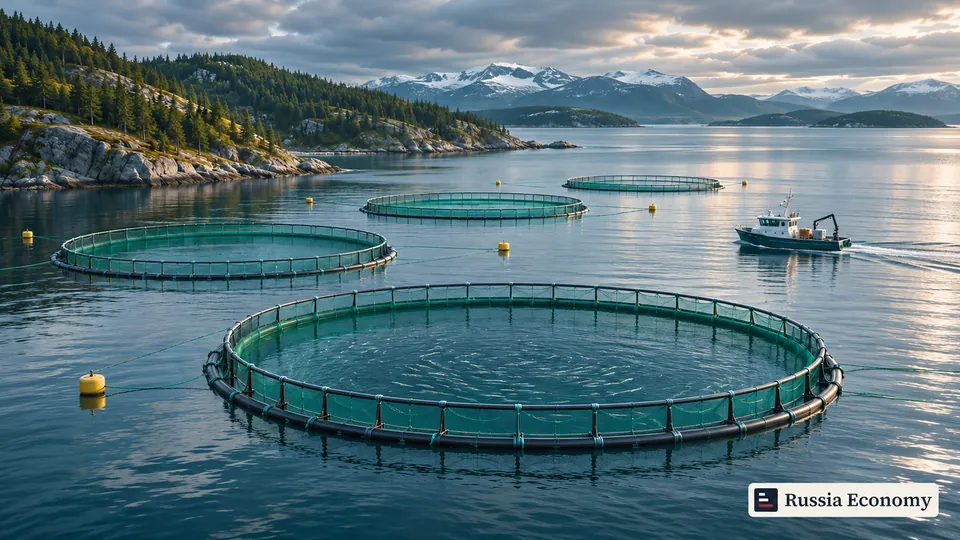
Russia produced 314,200 tonnes of commercial aquaculture products in the first nine months of 2026, an increase of 42,400 tonnes from a year earlier, the Federal Agency for Fisheries said on November 5.
Trout and Atlantic salmon were the strongest-growing named group in the release. Their combined output increased 32.2% to 130,500 tonnes, accounting for more than 40% of the national aquaculture total.
Salmon and trout lead the expansion
The reported increase puts the previous year's nine-month total at 271,800 tonnes. Calculated from those published rounded figures, overall aquaculture output rose approximately 15.6%. That percentage is a calculation from the agency's totals, while the 32.2% increase for trout and salmon is stated directly in its release.
Dividing 130,500 tonnes by the overall 314,200 tonnes gives a share of about 41.5% for trout and Atlantic salmon. This explains the agency's description of the group as accounting for more than 40% of output.
The comparison covers January through September, not the whole of 2026. It also concerns farmed production, rather than the national wild catch or all seafood supplied to Russian consumers.
Other categories also increased
The agency reported 91,200 tonnes in its category of valuable aquatic organisms, up 19%. Sturgeon production increased 6% to 6,700 tonnes.
The official November 5 release does not provide a complete species-by-species table. Its named categories should therefore not be added together as if they were an exhaustive, mutually exclusive breakdown of total output.
They nevertheless show that the expansion was not limited to the trout and salmon category. The size and pace of growth differed across the groups reported.
A supply source alongside the wild catch
The agency said farmed fish supplements capture fisheries and is not directly tied to the cyclical returns of wild Pacific salmon. It presented the expansion as a way to broaden and stabilize the supply of red fish.
That is an assessment of production and supply. The release does not report retail prices, household purchases or the amount of farmed output sold domestically rather than exported. More production cannot by itself establish that shoppers paid less.
The site's overview of Russia's economy explains the distinction between output, demand and household conditions. Here, the evidence is a physical production increase, not a measured change in consumer affordability.
The agency's next priorities
The release also recalled fisheries agency head Ilya Shestakov's call for a greater focus on intensive farming technologies, genetics and breeding, domestic feed and stocking material, disease prevention and a wider range of cultivated species.
These are stated development priorities, not proof that particular investments have already been completed. The agency emphasized cooperation between science and business as the next stage of the sector's development.
The new figures establish a sizeable nine-month increase led by trout and salmon. They leave the fourth-quarter outcome and the financial performance of individual producers to later releases.