NewsBusiness
Russia's revised September car sales show 0.1 percent growth as Tenet T7 leads SUVs
Avtostat's corrected passenger car figures put September at 122,800 vehicles, but neither the revision nor the model ranking proves a lasting demand recovery.
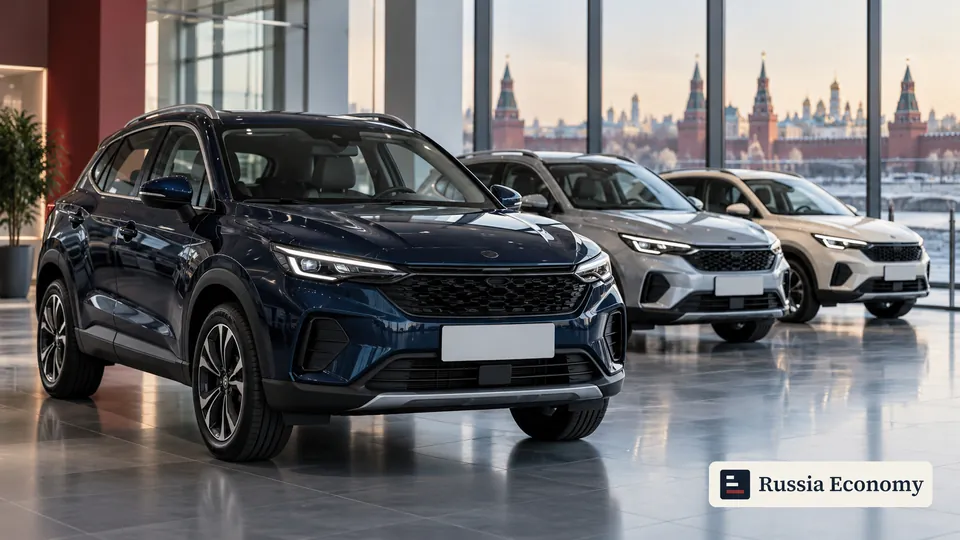
Russia's new passenger car sales reached 122,800 in September 2026, up 0.1 percent from a year earlier, according to Avtostat's corrected October 12 release. The industry estimate puts the month just above the previous September. It does not establish that underlying demand has recovered.
In Avtostat's corrected September release, the agency says it reprocessed September and nine month information after receiving delayed data. Its series uses data from PPK and Avtostat's own segmentation. This is a primary industry estimate, not an official Rosstat statistical release.
A revision changes the record of the same month
The revised January to September total is 967,800 new passenger cars, an increase of 8 percent from the corresponding 2025 period. That cumulative comparison and September's 0.1 percent increase describe different time windows. Neither is a seasonally adjusted measure of growth from August.
Russia Economy's analysis: late information can alter the recorded total without representing purchases made after the reporting month. Comparing an earlier estimate with a corrected one measures a statistical revision, not sales growth between two dates. The new total should replace the superseded figure wherever September is discussed.
Tenet T7 leads SUVs, while Lada leads brands
Avtostat's industry figures put Lada first with about 30,300 vehicles and a 24.67 percent share. Haval follows with 14,300 and Tenet with 13,400. Geely and Changan recorded approximately 6,700 and 6,500 respectively. These are sales counts, not revenue or profit rankings.
Among models, the Lada Granta family leads with 11,600. Tenet T7 takes the SUV lead with 6,900, ahead of Haval Jolion's 6,000. The agency classifies Tenet as a domestic brand and identifies its roughly fivefold annual sales increase as occurring from a low comparison base. That brand increase is separate from the T7 model total.
Brand identity does not establish import content
Russia Economy's analysis: a domestic brand label is not a measurement of domestic components or value added. Equally, a foreign brand label alone does not identify the assembly location of every vehicle sold. The Russian industry explainer provides the broader distinction between production and industrial capability.
The release does not quantify how scrappage fees affected September purchases or transaction prices. Attributing the revision or Tenet's ranking to those fees would require separate evidence. Nor do the counts reveal buyer motives, discounts or financing terms. The business coverage puts such questions in context; the present finding remains a corrected sales total and a dated brand and model mix.