ExplainerTrade & Sanctions
Russia's parallel imports: how the mechanism works
The exception permits selected genuine goods without separate import consent from rights holders, while leaving foreign restrictions and commercial risks in place.
Russia's parallel-import mechanism allows specified genuine goods to enter the country without separate consent from the holder of the relevant intellectual-property rights for that import. It does not authorize counterfeit products, and it does not make every foreign product eligible. The mechanism changes the treatment of covered intellectual-property claims inside Russia; it does not cancel another country's export controls or sanctions.
That legal distinction explains both its usefulness and its limits. A product can be authentic, available from an independent trader and eligible under Russian import rules, yet still face restrictions on export, payment, transport or servicing. Parallel imports address one part of the commercial chain rather than all the obstacles created after Russia's full-scale invasion of Ukraine, launched in February 2022.
What makes an import parallel
A manufacturer normally organizes distribution through its own subsidiaries, authorized wholesalers or approved retailers. A parallel importer obtains genuine goods through another commercial channel and sells them into a market outside that authorized distribution arrangement. The word describes the relationship to the rights holder's distribution system, not a separate category of counterfeit merchandise.
The key issue is exhaustion of intellectual-property rights. Once a rights holder has put a product on the market, the law determines how far it can continue to control later sales or imports of that particular item. Different exhaustion rules can apply to domestic, regional and international circulation. Selling a genuine product abroad does not automatically settle the legal position of importing it into every other market.
Russia's exceptional mechanism operates through a government framework and a ministry list. Eligibility is not established simply by saying that a brand left Russia or that a product was bought legally somewhere else. The relevant listed goods, codes, trademarks and effective dates determine the scope of the exception.
This is also why parallel imports should not be used as a synonym for smuggling. The Russian government's original announcement explicitly retained customs and control procedures. A commercial shipment can use an independent distribution channel while still requiring declaration, duties and conformity procedures. Whether a particular transaction complies with all applicable rules is a separate question from its description as parallel trade.
The mechanism introduced in 2022
Government Decree No. 506 of March 29, 2022 established the framework under which the Industry and Trade Ministry, Minpromtorg, identifies goods subject to exceptions from specified Civil Code protections. Rospatent's March 30 announcement described the measure as allowing sought-after original foreign goods to be imported without the rights holder's consent.
The government's stated purpose was to maintain supplies and help stabilize prices under external restrictions. That is a policy objective, not proof that prices fell by a particular amount or that all shortages disappeared. Measuring those outcomes would require product-level evidence and a comparison with what would otherwise have happened.
The Industry and Trade Ministry's official parallel-import guidance explains that only goods covered by its list can use the mechanism. It identifies Decree No. 506 as the legal foundation and distinguishes different ways that product codes and brands are combined in the list.
The framework subsequently changed. Government Decree No. 1057 of June 28, 2023 revised the provisions of Decree No. 506. The revised formulation covers specified Civil Code protections on the condition that the goods were put into circulation outside Russia by rights holders, patent holders or with their consent. The condition concerns the goods' legitimate original circulation, even though separate approval for import into Russia is not required under the covered exception.
Why the goods list is more precise than a brand list
Minpromtorg's guidance describes three forms of coverage. A customs commodity code may be paired with named brands, limiting the exception to those brands in that category. A code may instead cover a category while expressly excluding named brands. Or a code may be listed without brand restrictions, covering goods within that code.
These structures produce different results. A brand name appearing somewhere in the schedule is not blanket permission for every product carrying that name. Equally, the absence of a brand from one entry does not necessarily exclude a product covered by a different, unrestricted commodity code. Reading only a familiar logo or a broad category heading can therefore miss the actual scope.
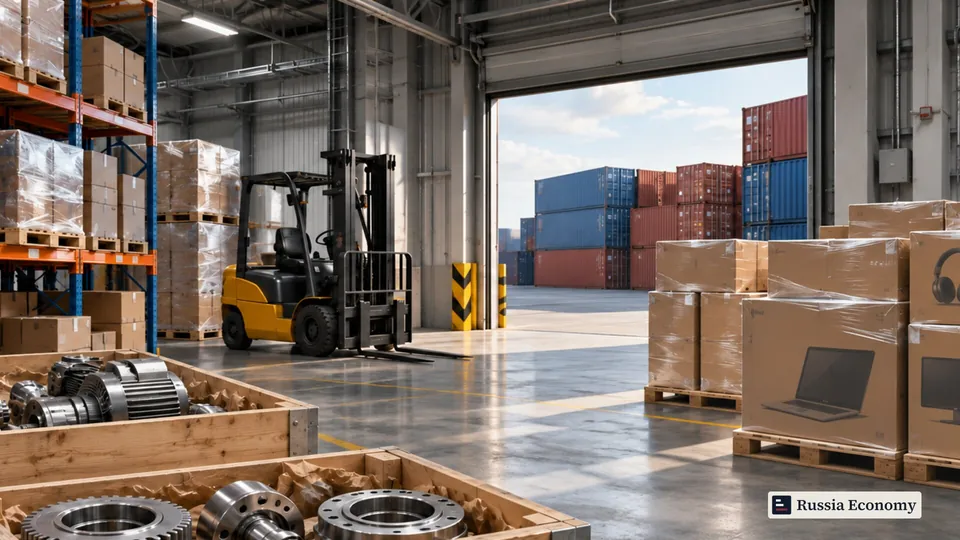
The framework has covered selected products across sectors including vehicles and components, machinery, electronics, clothing and footwear, cosmetics and other consumer goods. These examples describe the breadth of the mechanism over time, not an assurance that every item in those sectors remains eligible on November 3, 2026.
The list approved by Minpromtorg Order No. 2701 of July 21, 2023 has been amended repeatedly. Order No. 4769 of September 26, 2025 introduced further changes, with some exclusions taking effect on May 27, 2026. These included particular computer and storage-device code-and-brand combinations. The change cannot be summarized accurately as a ban on every product made by every affected electronics company.
Publication, registration and effective dates can differ. An announcement of an amendment does not mean all its provisions apply immediately. A static article can explain this structure, but cannot replace the operative product schedule for a specific shipment.
Russian permission does not override foreign restrictions
Intellectual-property consent, export authorization and permission to transact with a counterparty are separate legal questions. Russia's decision about the first cannot compel another jurisdiction to authorize the second or a bank to accept the third.
The US Bureau of Industry and Security explains that its Russia and Belarus controls apply to covered items under the Export Administration Regulations, including relevant reexports and transfers. Routing a product through another country does not by itself remove those controls. EU, UK and other rules have their own scope and must not be treated as identical to the Russian import exception.
Nor is every parallel import necessarily a sanctions violation. Some products or transactions may fall outside particular prohibitions, while others may require authorization or be prohibited. The classification depends on the applicable rules and facts. Calling the whole mechanism legal everywhere would be as misleading as calling every genuine product sold outside an authorized dealer network illegal everywhere.
Our sanctions and the economy explainer describes the wider restrictions. The narrower point here is that a domestic exception to selected intellectual-property protections does not grant universal permission for the complete international transaction.
Availability is different from the original commercial relationship
An independent supply channel can restore access to a product without recreating the manufacturer's distribution network. In economic terms, additional intermediaries, transport stages and financing requirements can add costs and uncertainty. These are possible channels of friction, not a quantified average surcharge for every parallel import.
Servicing also needs to be separated from delivery. A physical item may arrive while access to manufacturer support, software services, replacement components or an original international warranty remains different from that under an authorized sale. The Russian government's promise that goods remain subject to servicing requirements should not be interpreted as proof that the foreign manufacturer provides identical support in every case.
For industrial users, this distinction extends beyond the purchase price. Equipment availability and reliable operation over its useful life are different outcomes. A replacement component, a maintenance contract and a software update can involve separate suppliers and restrictions. The mechanism's domestic legal scope does not resolve each of those commercial dependencies.
What parallel imports reveal about economic adaptation
Parallel imports can preserve access to some foreign products and create opportunities for independent wholesalers. They can also coexist with substitution toward other brands or locally produced goods. These responses are not mutually exclusive, and a rise in one does not establish that the others disappeared.
The mechanism is distinct from Russia's trade relationship with any single country. Goods bought through an intermediary may have been manufactured elsewhere; country of dispatch, country of origin and the location of the rights holder are different attributes. The Russia-China economic relations guide covers the bilateral relationship, while this article concerns the legal and commercial structure of independent imports.
Reported trade values cannot, on their own, measure the share of all imports using this exception, the lawfulness of every transaction or the cost avoided through adaptation. A credible estimate needs a defined product scope, period and data source. No unsupported current market-size total is supplied here.
Russia Economy's analysis is that the mechanism should be understood as a selective distribution and intellectual-property adjustment. It can help goods reach buyers, while leaving financing, foreign restrictions and product support unresolved. Its economic role lies in those specific changes to access and cost, rather than a claim that sanctions either stopped all trade or ceased to matter.